What are corporate survival workshops?
Corporate survival workshops are an outdoor team building programme in which participants, guided by certified instructors, learn practical wilderness survival skills — fire-starting, shelter-building, navigation and water filtration — or take part in military-style mission scenarios with airsoft weapon replicas, tactical maps, and authentic military-style briefings.
Nature doesn't offer any allowances. There are no flipcharts here, no conference rooms, no coffee breaks. There is forest, terrain, and a specific objective — and a team that has to complete it with what they have.
That's exactly why survival works as a team building tool where other formats fall short. In the field, real leadership styles surface, genuine reactions to stress become visible, and it becomes clear who actually takes initiative when the situation is ambiguous. None of that can be observed in any four-walled workshop.
We offer two fundamentally different scenarios — chosen based on the character of the group, the expected intensity level, and the event objective.
Choose the scenario that fits your team
SCENARIO 1: WILDERNESS SURVIVAL — practical field survival training
A classic outdoor survival programme based on the original O.W.O. methodology (Fire – Water – Camp). Participants learn foundational and advanced survival techniques under the guidance of experienced instructors.
What participants do:
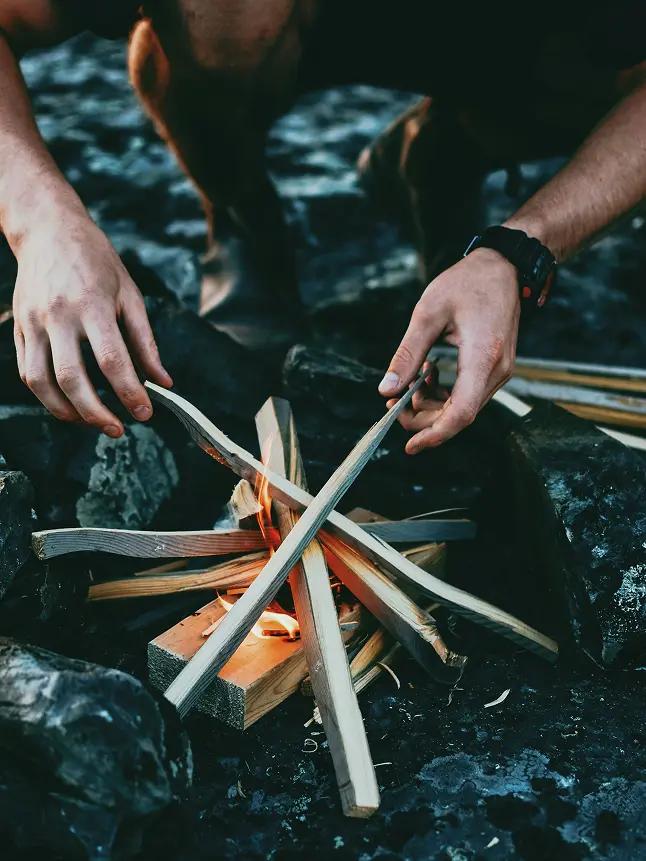
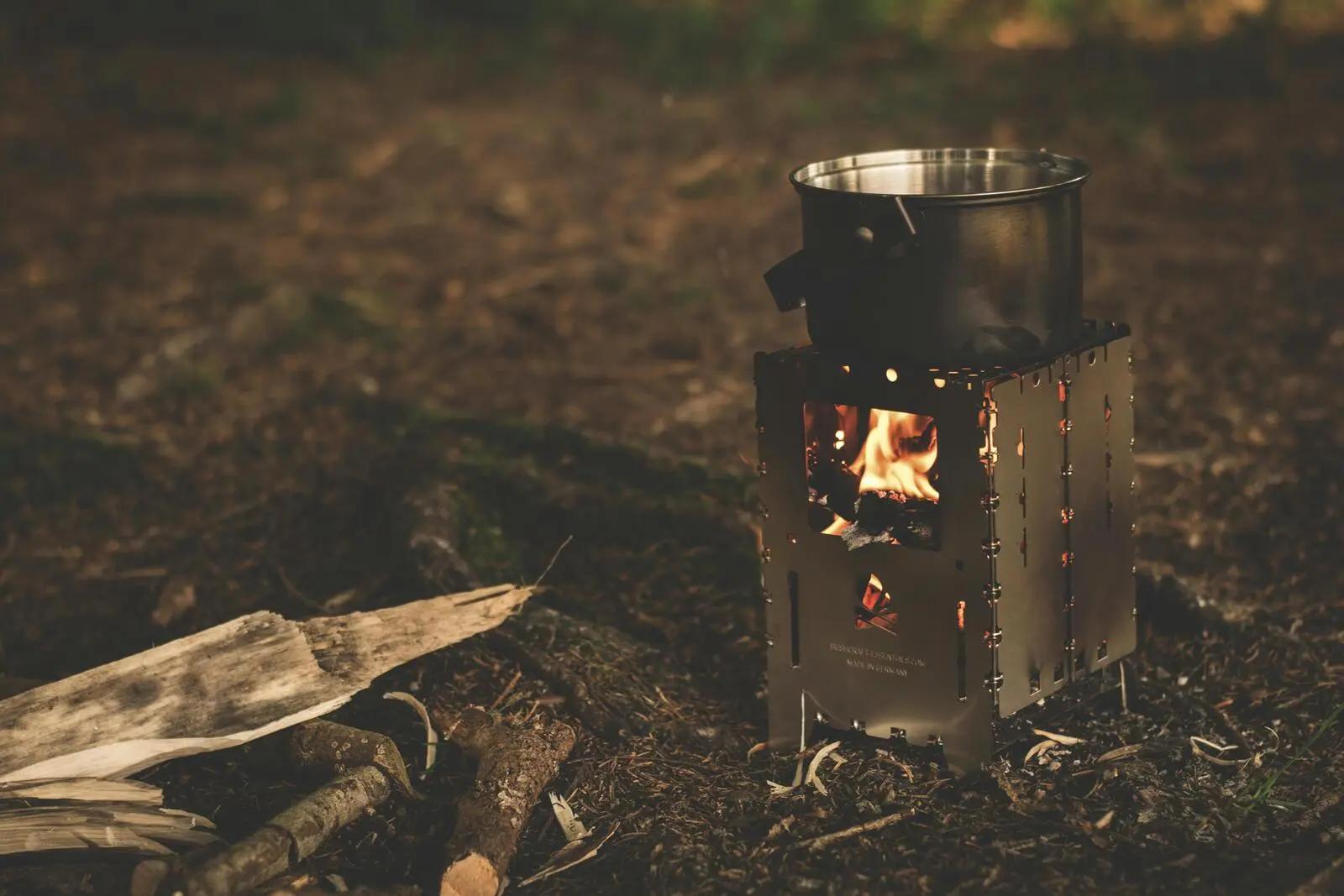
Fire — sourcing tinder materials, starting a fire using a ferro rod, building different types of fires, emergency fire-starting in wet conditions.
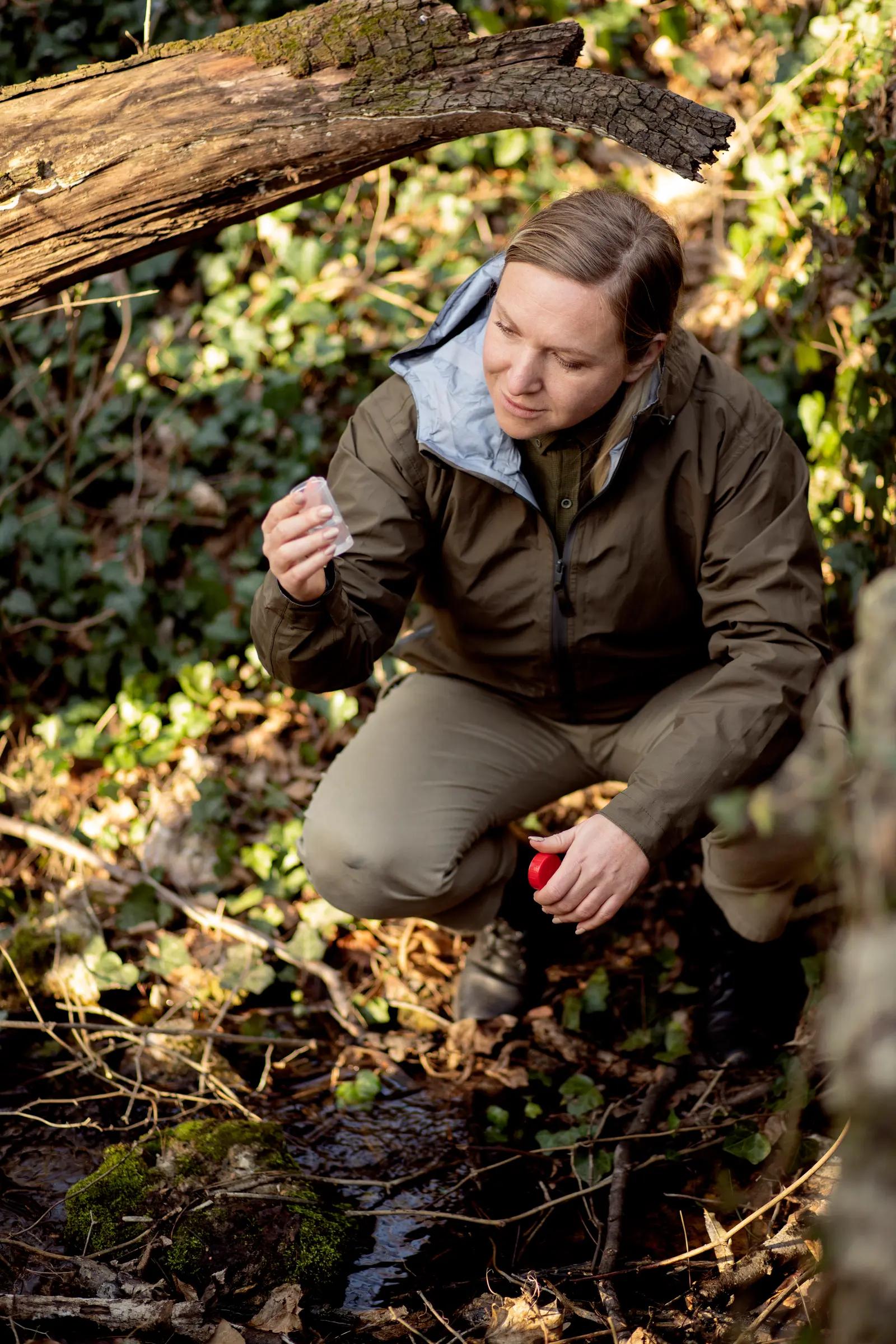
Water — sourcing water from the environment (from moss, plants, and soil), purification, building a field water filtration station from materials found on location, rationing and storage.
Camp — building an improvised shelter, securing a base camp, overnight thermal insulation (24h option), personal and camp camouflage.
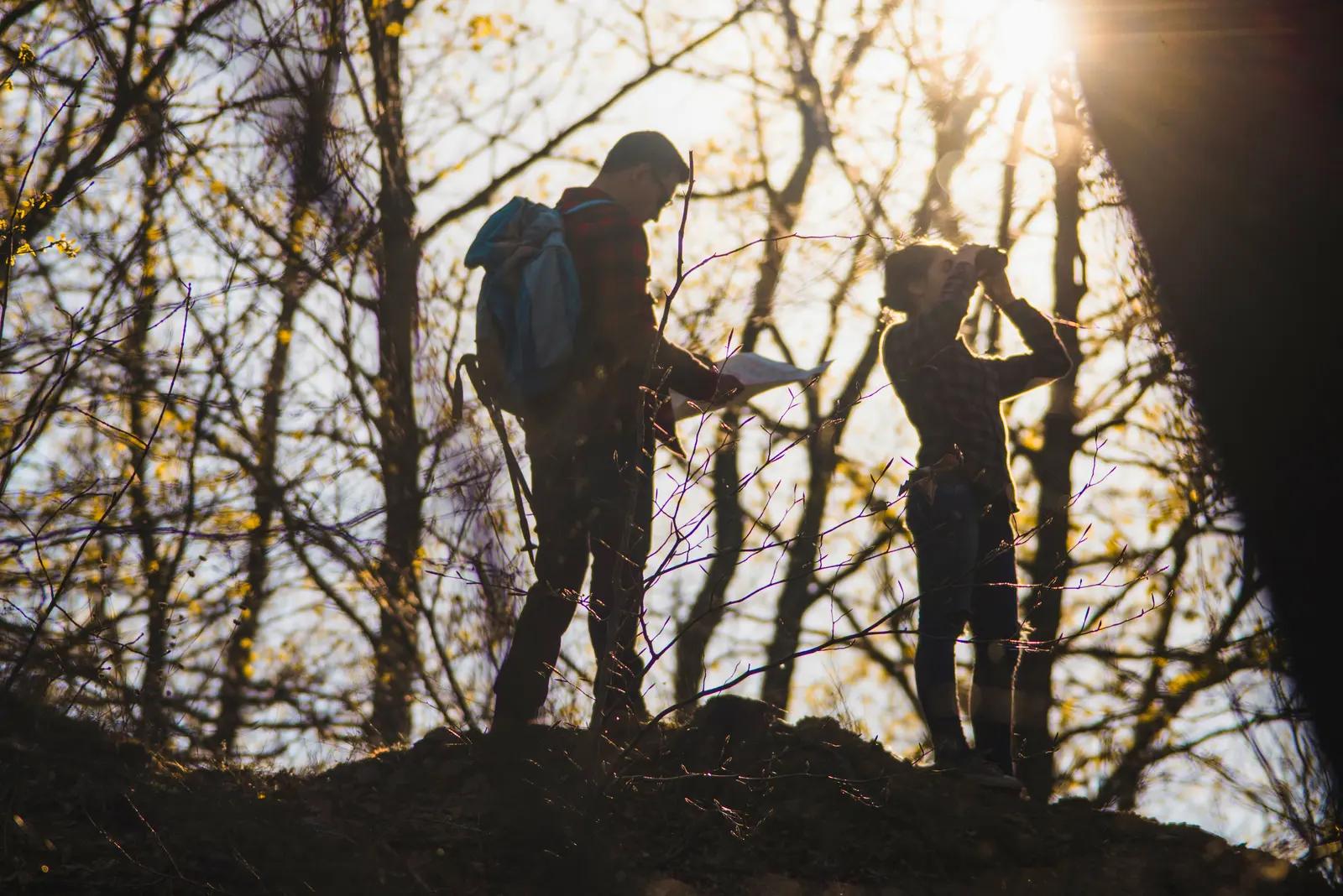
Navigation — compass and map orientation, natural navigation (sun, stars, moss on trees), waypoint identification.
Additional elements: emergency signalling, building simple tools (fish spear, bow and arrows), constructing an earth oven and field pressure cooker, traversing difficult terrain (wetlands, rivers — available locations depending).
Best for: groups looking for a genuine survival experience that develops practical skills and cross-functional cooperation in non-standard conditions. Works particularly well as a centrepiece programme for a company retreat with overnight accommodation.
Duration: 3–6 hours or a 24-hour overnight-in-the-field variant
SCENARIO 2: MILITARY SURVIVAL — tactical mission with airsoft replicas
An intensive narrative-tactical scenario inspired by military operations. Participants are divided into strike groups Alpha, Bravo, and Charlie, each receiving separate mission objectives before heading into the field.
Two mission variants:
Variant A — X-RAY Extraction: Commando groups set out with maps and weapon replicas (M4 carbines, AK74, G36, Colt 1911 pistols, MP5) to locate the X-RAY target — which can be a person (for example, the CEO or a director playing the role of a "hostage"), a hidden object, or a specific item. Two groups sweep the terrain while the third establishes a secure base camp with survival training elements. Once X-RAY is located, the scenario moves into the tactical training phase.
Variant B — MIL-SIM HUNT: Commando groups have crossed into hostile territory. They must establish bases, conduct reconnaissance, and — as adversaries to each other — locate and seize the TANGO-WHISKEY target. Groups communicate via radio, respawning at the instructor's base after being "hit". The first team to secure the target and safely escort it back to base wins that phase. Instructors continuously update mission objectives to keep the game moving.
Tactical training (element of both variants): Combat shooting stances, handling short and long weapon replicas, basic combat formations, patrol tactics and contact reaction, ambush and counter-ambush, flanking manoeuvres, withdrawal techniques, target detection.
Non-airsoft variant: the military scenario can be run without weapon replicas — groups complete terrain tasks with elements of navigation, survival skills, and logic-based challenges delivered by instructors in a structured sequence.
Best for: groups seeking intense physical and tactical experiences, adrenaline, and competitive engagement. Particularly effective for team building with sales, operations, and technical departments — wherever precision, command, and performance under time pressure are valued.
Duration: 3–6 hours or a 24-hour variant
How does the event run?
- 1Briefing and team formation
Instructors introduce the rules, equip participants with gear (ferro rods, compasses, maps), and divide the group into teams. Each team receives its first assignment.
- 2Navigation to the activity zone
Teams head out with maps to their designated points. First practical test: does anyone know how to read a map?
- 3Survival stations
Teams rotate through stations: fire, water, camp, navigation, emergency signalling. At each station, the instructor demonstrates first, then participants execute independently. Effectiveness and teamwork are assessed — not speed.
- 4Advanced challenges
Building improvised tools, traversing a challenging terrain section, constructing a field water filter from natural materials. In the 24h variant: setting up camp and overnight field stay.
- 5Debrief
Instructors review the session from both a technical and team dynamics perspective. What worked well? Who took the lead? Where did tension emerge? This stage can be extended into a facilitated discussion involving HR or a senior manager.
Survival reveals what the office doesn't
Most team building events allow people to behave exactly as they always do — because nothing is genuinely at stake. Survival works differently: terrain, time pressure, and real consequences of mistakes activate behaviours that don't appear in any competency framework. That's what makes it one of the most valuable diagnostic tools available to HR — and one of the most memorable experiences for participants themselves.
Leadership in practice, not in theory
In the field, a job title isn't enough. Who actually takes command when the map is unclear? Who loses composure when the plan falls apart? Who motivates the group at hour three of the march? Survival answers those questions without a survey, without a facilitator, and without a debrief prompt.
Two intensity levels — one format
Wilderness survival and the military scenario are two fundamentally different emotional experiences, but they share the same underlying principle: the team either handles it together or doesn't handle it at all. The choice of variant lets you precisely match the adrenaline level to the character of the group — from a calm woodland adventure to a full tactical mission.
Skills that stay
A survival day ends with something concrete: every participant goes home knowing how to start a fire without matches, how to build a water filter, and how to navigate with a compass in the field. That's rare in the world of team building — where memories typically fade within a week. Here, knowledge remains.
When do survival workshops work best?
On company retreats with an outdoor programme
Survival is a natural daytime programme for offsites with overnight accommodation near a forest or open terrain. The 24-hour variant with field camping is one of the most talked-about experiences you can offer a corporate group.
For sales, operations, and technical teams
Groups accustomed to working under pressure, hitting targets, and being held accountable for results respond particularly strongly to the military scenario. The terminology, mission structure, and approach to problem-solving feel natural — the format doesn't ask them to step outside their working style.
When previous integrations "didn't land"
If your team has already been through escape rooms, city scavenger hunts, and wine tastings, and the team dynamics still aren't where they should be — survival operates on a different level. Shared physical effort and real terrain challenges build a kind of bond that no board game creates.
As part of a leadership development programme
Survival workshops with an extended debrief (optional HR or coaching element) are increasingly chosen as a practical illustration of crisis management, high-pressure decision-making, and situational leadership. The field provides the context; the debrief provides the insight.
For groups with significant age or cultural diversity
Terrain levels differences better than any facilitator. When you have to start a fire together or find a route without GPS, age, seniority, and background stop mattering.
Frequently asked questions — Survival Workshops
What is the difference between wilderness survival and the military scenario?
What is the difference between wilderness survival and the military scenario?
Wilderness survival is a programme built around field survival techniques — fire, water, shelter, navigation. It focuses on practical knowledge and team cooperation during shared tasks. The military scenario is a narrative tactical mission with airsoft weapon replicas, strike group structure, and military tactics. Both formats develop the same team competencies (communication, decision-making under pressure, leadership), but through very different emotional experiences. The choice depends on the character of the group and the desired intensity level.
Are airsoft replicas safe? What about participants who have concerns?
Are airsoft replicas safe? What about participants who have concerns?
The airsoft replicas used in the military scenario are pneumatic devices that fire small plastic pellets. Before use, all participants receive a mandatory safety briefing. We provide protective masks — their use is absolutely required during any live play. Participants with concerns can take part in the non-airsoft variant, where groups complete terrain and navigation tasks without any replica elements.
Do participants need to be physically fit?
Do participants need to be physically fit?
We adapt the scenarios to the group's fitness level. The basic wilderness survival variant does not require above-average fitness — it involves walking, manual tasks, and logistics challenges. The 24-hour military variant is more physically demanding. When booking, we ask about the group's composition and adjust the route and task intensity accordingly.
What is the minimum and maximum group size?
What is the minimum and maximum group size?
We run workshops for groups of 8 to 200 people. For groups above 60, we increase the number of instructors and run parallel station tracks so that every participant gets full engagement with every element of the programme.
Can the survival workshop include an overnight stay in the field?
Can the survival workshop include an overnight stay in the field?
Yes — and it's one of the most popular options. The 24-hour variant includes an overnight stay in a survival camp with full equipment. Participants sleep in shelters they've built themselves or in tents, depending on the variant. Field rations are included: military-grade tinned food (min. 88% meat content), high-calorie bread, protein bars, dried fruit and nut mix, and campfire sausages where permitted by the landowner.
What does the organiser provide, and what should participants bring?
What does the organiser provide, and what should participants bring?
We provide: survival equipment (ferro rods, compasses, maps), airsoft replicas and ammunition (military variant), protective masks, food and water (in catered packages), transport and logistics.
Participants should bring: comfortable clothing appropriate for the season and weather conditions, sturdy outdoor footwear, and optionally their own survival gear.
Do you run survival workshops across all of Poland?
Do you run survival workshops across all of Poland?
Yes. We bring equipment and instructors to a location specified by the client, or we organise transport to a suitable forest terrain. Transport costs are factored into the quote based on distance from our logistics base.
How much do corporate survival workshops cost?
How much do corporate survival workshops cost?
Pricing depends on the chosen scenario, number of participants, and additional options (24-hour variant, catering, transport). We provide individual quotes after a short brief — no commitment required. Share your group size, preferred date, and scenario, and we'll come back with a specific proposal.